
IEA: building cooling demand overtakes heating for the first time in energy historyImage: maccus.fr
Cooling

IEA: building cooling demand overtakes heating for the first time in energy history

Heat 46 · #13 in Science · Cooling3 reports · 3 sources · First reported Nov 19 · Updated Nov 20

The story

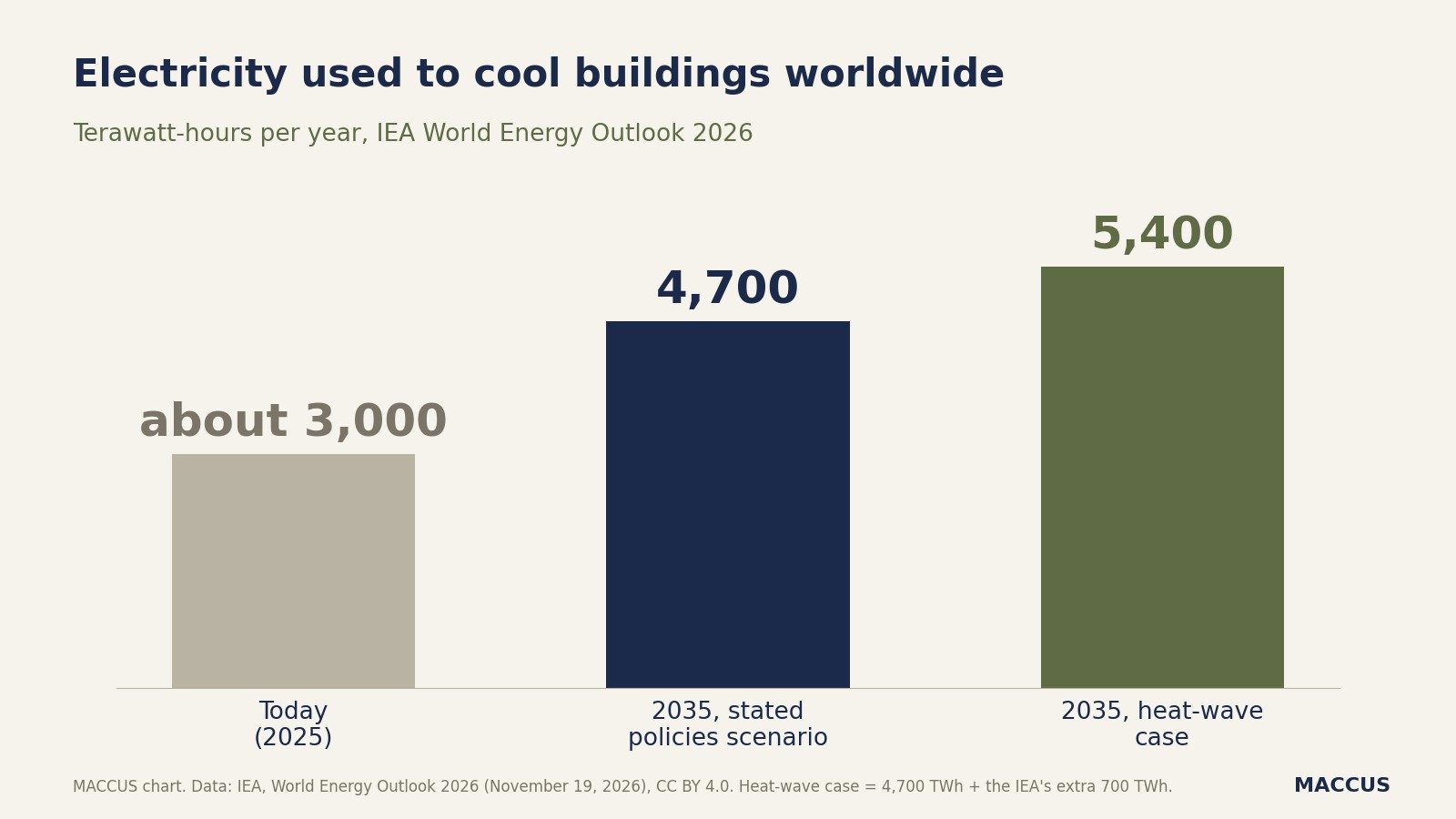
For the first time in energy history, demand for cooling in buildings is overtaking demand for heating, according to the IEA's World Energy Outlook 2026, released November 19. The agency projects cooling electricity demand to rise by 1,700 TWh by 2035 under its Stated Policies Scenario, from about 3,000 to 4,700 TWh a year; cooling demand has already grown 55 percent since 2015 and accounts for more than 40 percent of the growth in energy services through 2035 in every scenario. A heatwave case would add a further 40 percent, another 700 TWh. The drivers are rising incomes and rising temperatures, including unusually hot summers in traditionally cooler regions such as Europe.
Latest development
no keepalive in Lobsters, Techmeme, or YouTube this round

How it unfolded

  1. no keepalive in Lobsters, Techmeme, or YouTube this round
  2. Oilprice, Bloomberg Law, The Edge Singapore and Renewables Now all covered the finding the same day
  3. drivers are rising incomes and rising temperatures, with unusually hot summers in traditionally cooler regions including Europe
  4. heatwave case adds 40% more (+700 TWh)
  5. cooling is more than 40% of the growth in energy services through 2035 in every scenario
  6. cooling demand up 55% since 2015
  7. cooling electricity +1,700 TWh by 2035 under the Stated Policies Scenario (about 3,000 to 4,700 TWh a year)
  8. Nov 19
    IEA World Energy Outlook 2026, released 2026-11-19: 'Already today, for the first time in energy history, demand for cooling in buildings is overtaking that for heating'

The angle

For the first time ever, the world spends more energy cooling buildings than heating them - what the IEA milestone means for your electricity billSuggested format: Short video · for Energy and climate watchers, homeowners facing hotter summers and higher power bills

Heat

Now 46 · Peak 46 · 64 recorded checks since Nov 20
Full ranking →